Client Confidential
Child Monitoring Wearable
Every parent has experienced that moment of uncertainty when a child wanders just out of sight. SPOT™ was created to provide peace of mind in those moments. It provides parents and caregivers a simple, reliable way to stay connected to their child’s location.
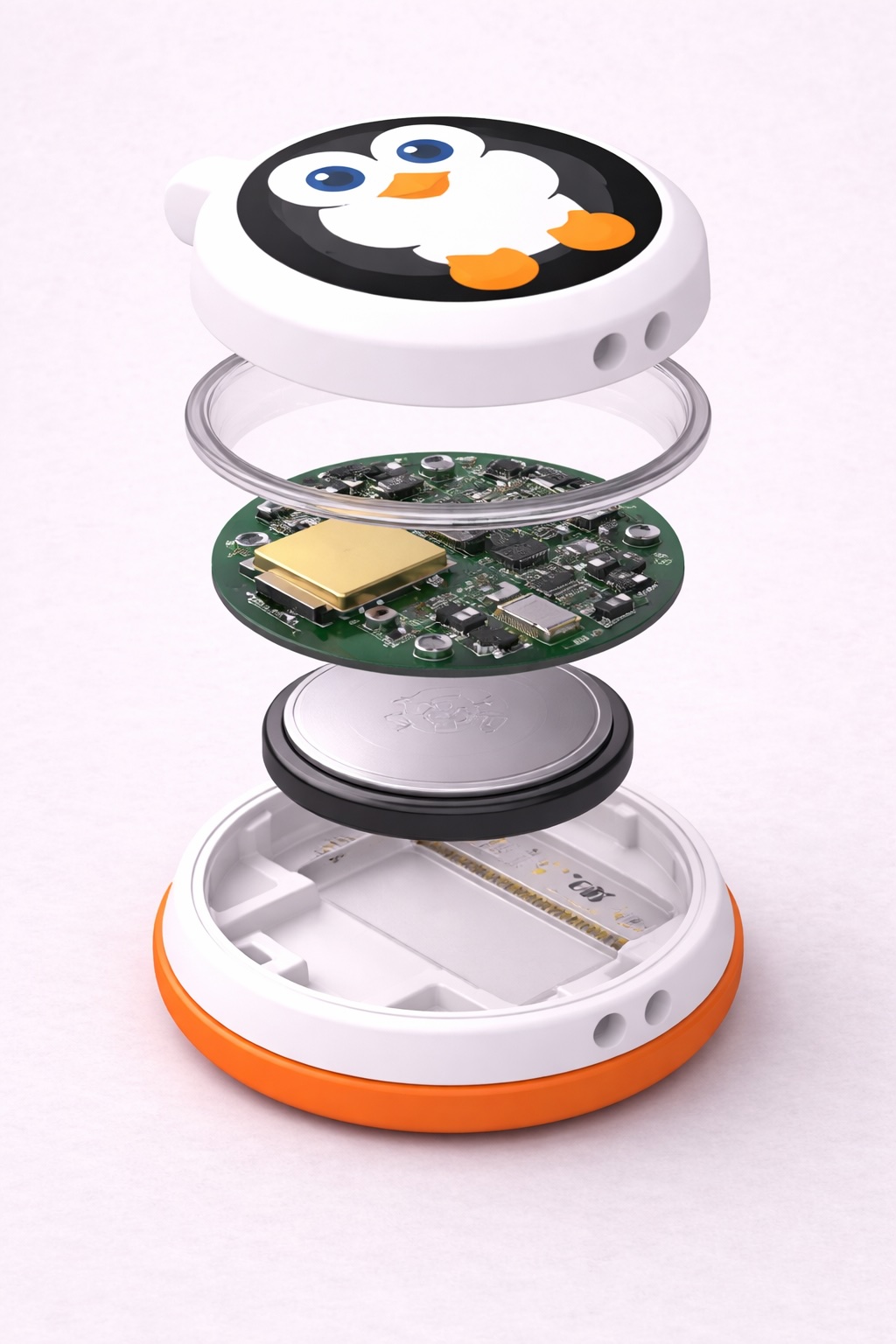
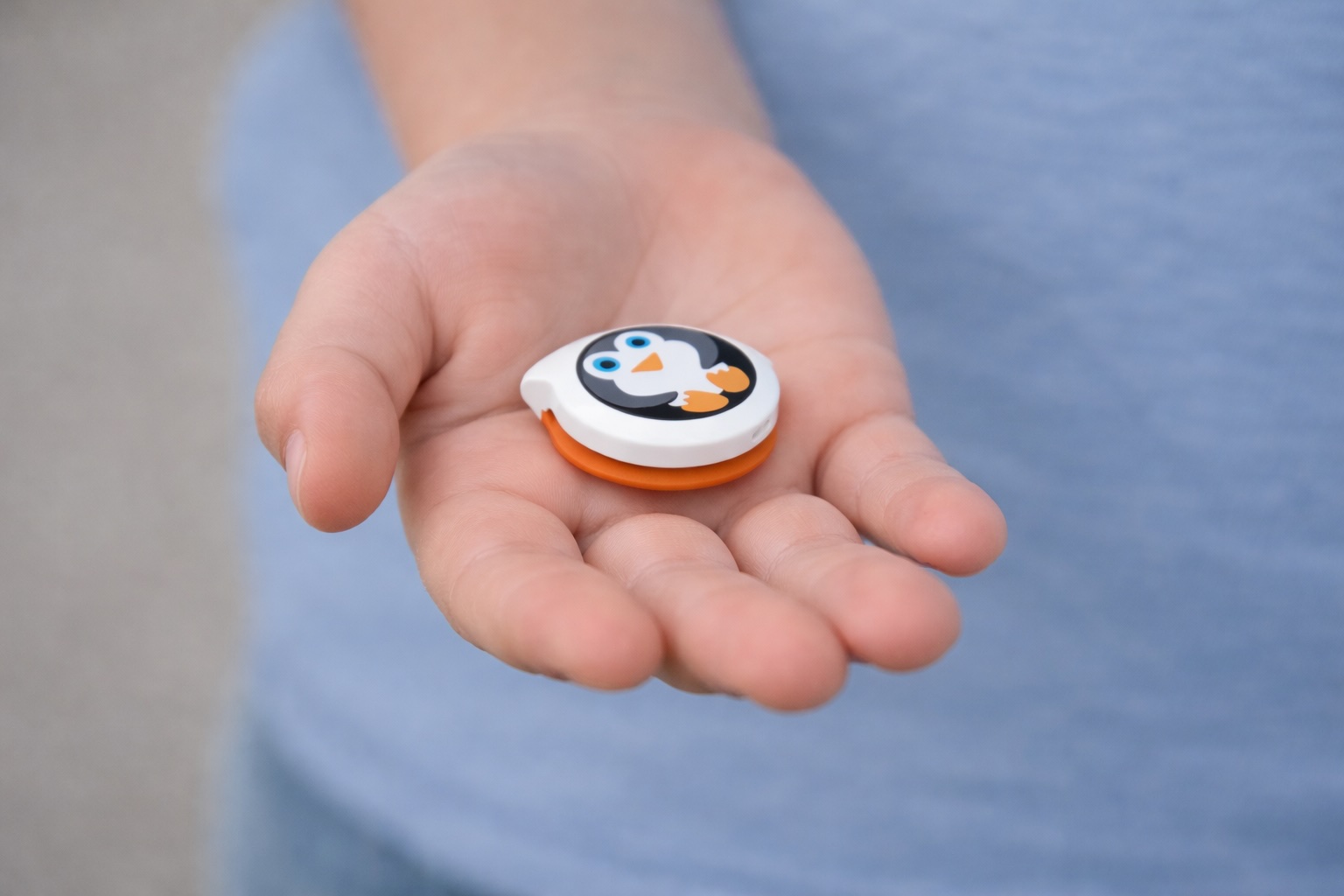
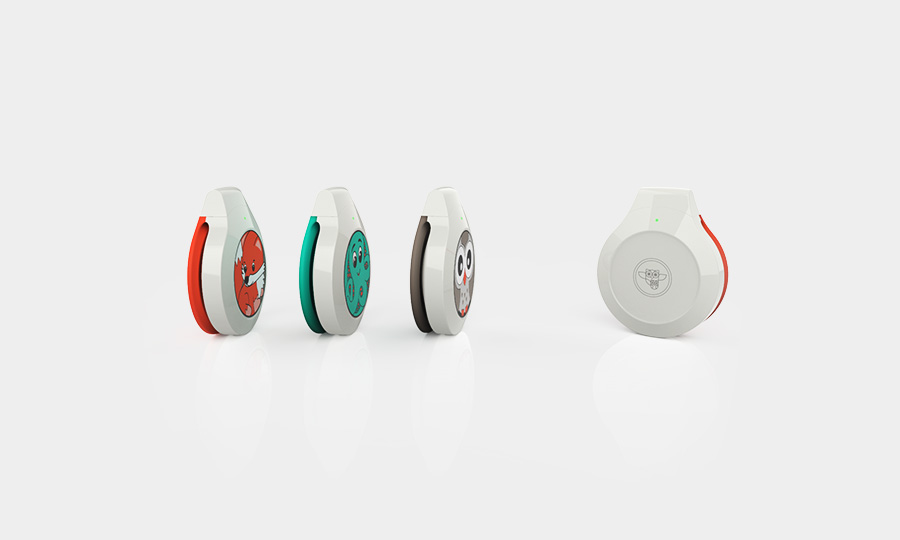
SPOT™ is a child-friendly wearable device designed to provide real-time outdoor location awareness through a simple, intuitive mobile experience. The device clips securely to a child’s clothing and communicates wirelessly with a companion app, delivering location updates, device status, and alerts.
Our team partnered with the client to develop a fully integrated prototype system, including industrial design, custom electronics, and embedded firmware. The system included a companion charging and storage case. We advanced the product design from early concept to a demonstration-ready, manufacturable prototype platform.
Contributions
- Industrial design and wearable form factor development
- System architecture and component selection (GPS, LTE)
- Custom electronics and antenna integration
- Embedded firmware development and system controls
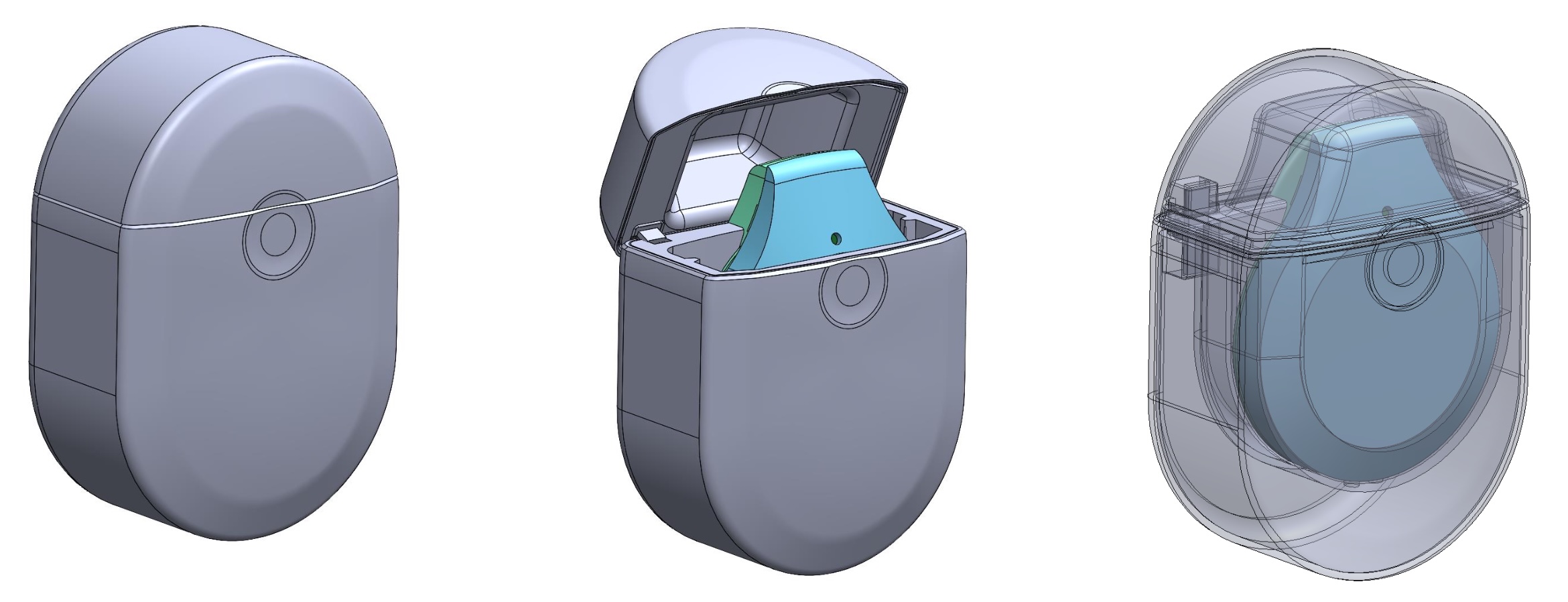
- Charging/storage case design and integration
- Antenna design, RF testing, and optimization
- Prototype development and field testing
Impact
Established a functional connected device platform that demonstrates reliable tracking, user-friendly design, and a clear path toward production.
TAGS
TOOLS
SolidWorks
Rhino
Altium
Product Vision
The SPOT platform was designed to:
- Provide reliable real-time outdoor location tracking
- Deliver seamless wireless communication to a mobile app
- Create a child-friendly, unobtrusive wearable form factor
- Enable simple, intuitive interaction for parents and caregivers
- Support “on-the-go” use through an integrated charging and storage case
- Establish a clear path toward high-volume manufacturable design
The system combines GPS-based positioning and LTE connectivity within a compact wearable architecture.
System Architecture
The SPOT platform consists of two primary components:
Wearable Tracker
- GPS-based outdoor location tracking
- LTE communication to mobile device/cloud
- Custom electronics and embedded firmware
- Rechargeable battery with power management
- Compact enclosure with clip-based attachment
Charging & Storage Case
- Portable charging solution for the wearable device
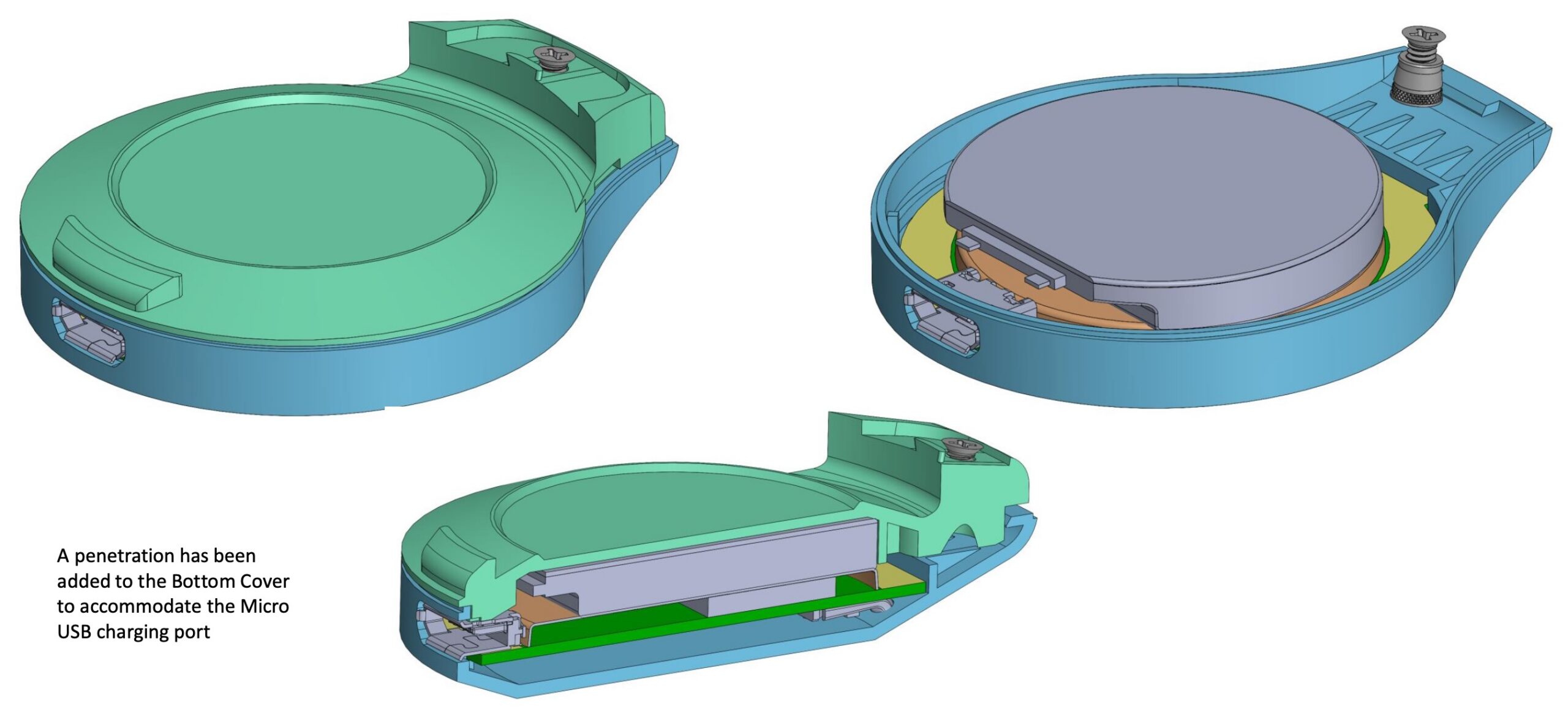
- Rechargeable via standard USB interface
- Designed for convenient storage in bags or pockets
- Enables continuous “ready-to-use” operation
Engineering Challenges
Developing a compact, connected wearable required solving for:
- Integrating GPS and LTE radios with reliable antenna performancein a small enclosure
- Managing power consumption to support real-world usage scenarios
- Designing a secure, comfortable attachment mechanism for children
- Balancing size, durability, and manufacturability
- Coordinating hardware, firmware, and mobile app interfaces
- Ensuring RF performance within a constrained industrial design
Engineering & Design Approach
1. Industrial Design & User Interaction
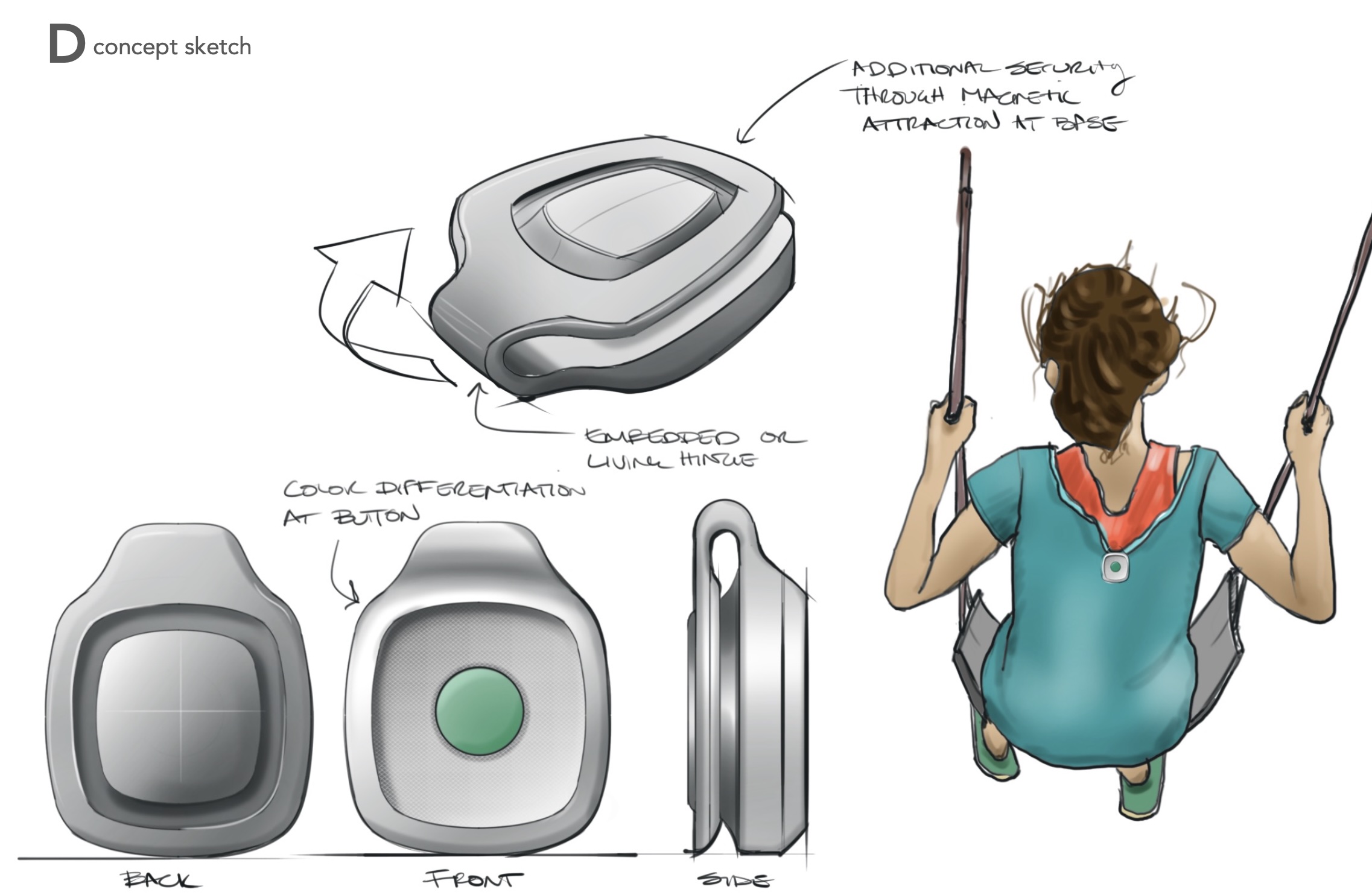
Industrial designer developed the design language and product concepts for both the wearable device and charging case, with a focus on usability, comfort, and emotional appeal.
Key efforts included:
- User interaction studies to understand caregiver and child use cases
- Development of form factors that are approachable, friendly, and unobtrusive
- Exploration of multiple design concepts and visual directions
- Creation of form prototypes to evaluate ergonomics, scale, and attachment strategies
The final design balances child-friendly aesthetics with functional performance, ensuring the device integrates naturally into everyday use.
2. Requirements & Technology Evaluation
We began by aligning on product requirements and conducting a comprehensive technology survey:
- Defined system architecture and performance requirements
- Evaluated GPS, LTE, and alternative positioning technologies (including UWB)
- Conducted real-world testing with the alternative technologies
- Designed, prototyped and tested various bi-stable clip approaches
- Assessed component options, trade-offs, and development kits
- Identified power management and battery strategies
This phase established a validated technology foundation for prototyping.
3. Breadboard Prototype & Architecture Validation
A proof-of-concept platform was developed using development boards and off-the-shelf components to:
- Validate tracking and communication performance
- Test antenna configurations and RF behavior
- Evaluate power consumption and battery life
- Demonstrate system feasibility
Size-representative enclosures and tethered prototypes were created to assess:
- Form factor constraints
- Antenna performance within packaging
- Early user interaction concepts
4. Integrated Prototype Development
We developed a fully integrated prototype system combining industrial design, custom hardware, firmware, and mechanical design.
Mechanical Design & Enclosure
- Compact wearable enclosure with refined industrial design
- Bi-stable clip attachment mechanism for secure placement
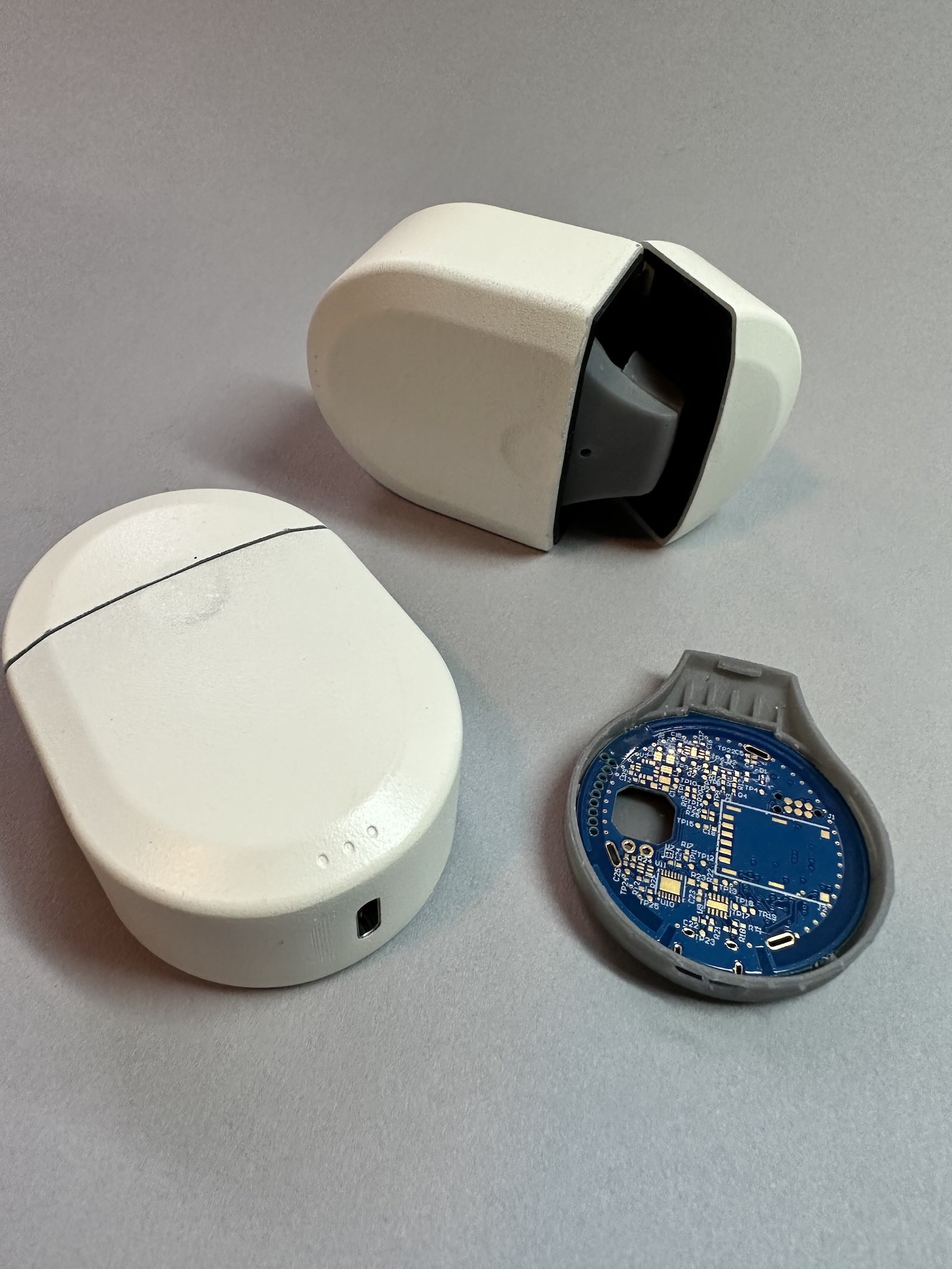
- Iterative 3D-printed prototypes for fit, usability, and aesthetic validation
Electronics Development
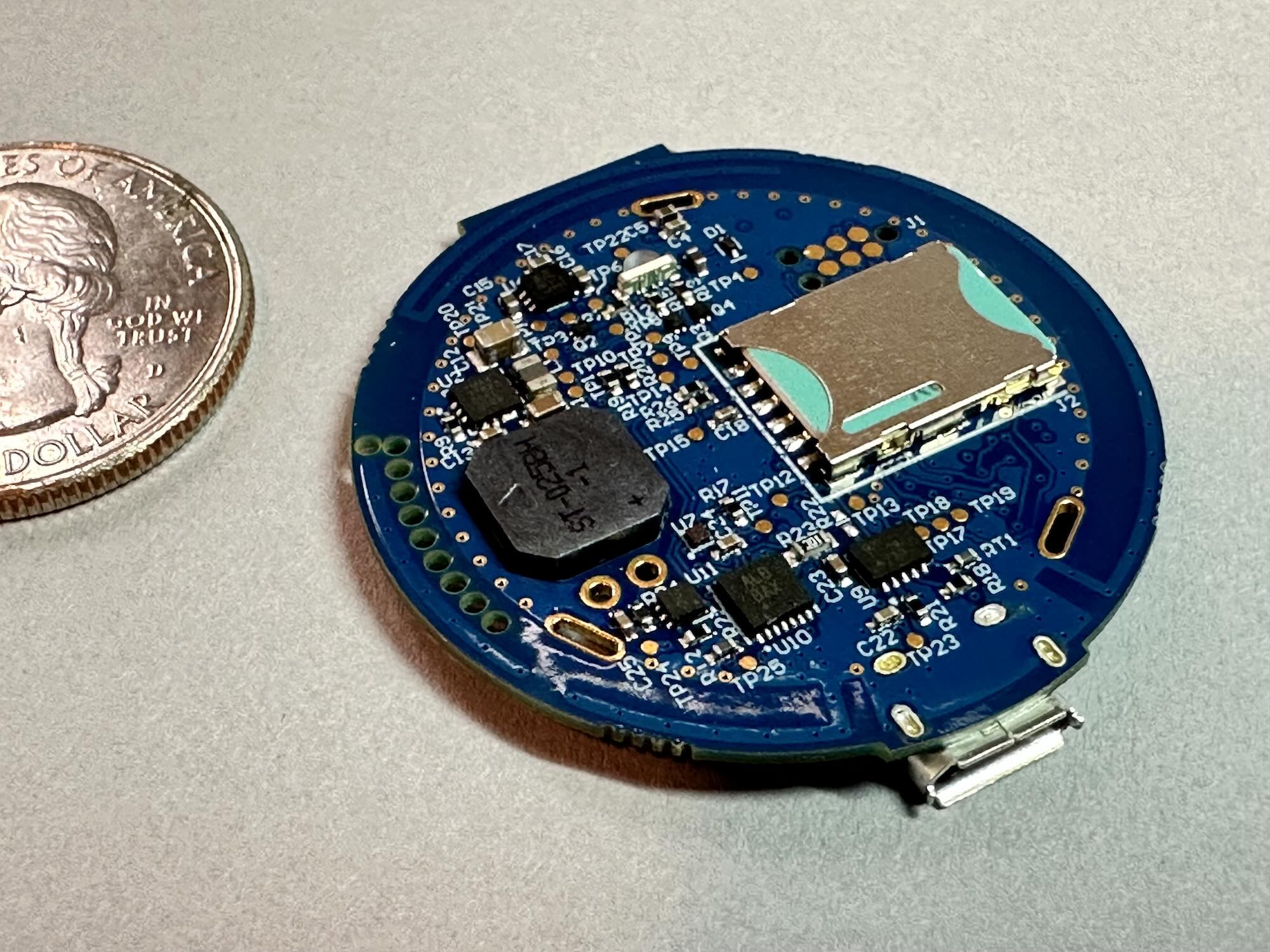
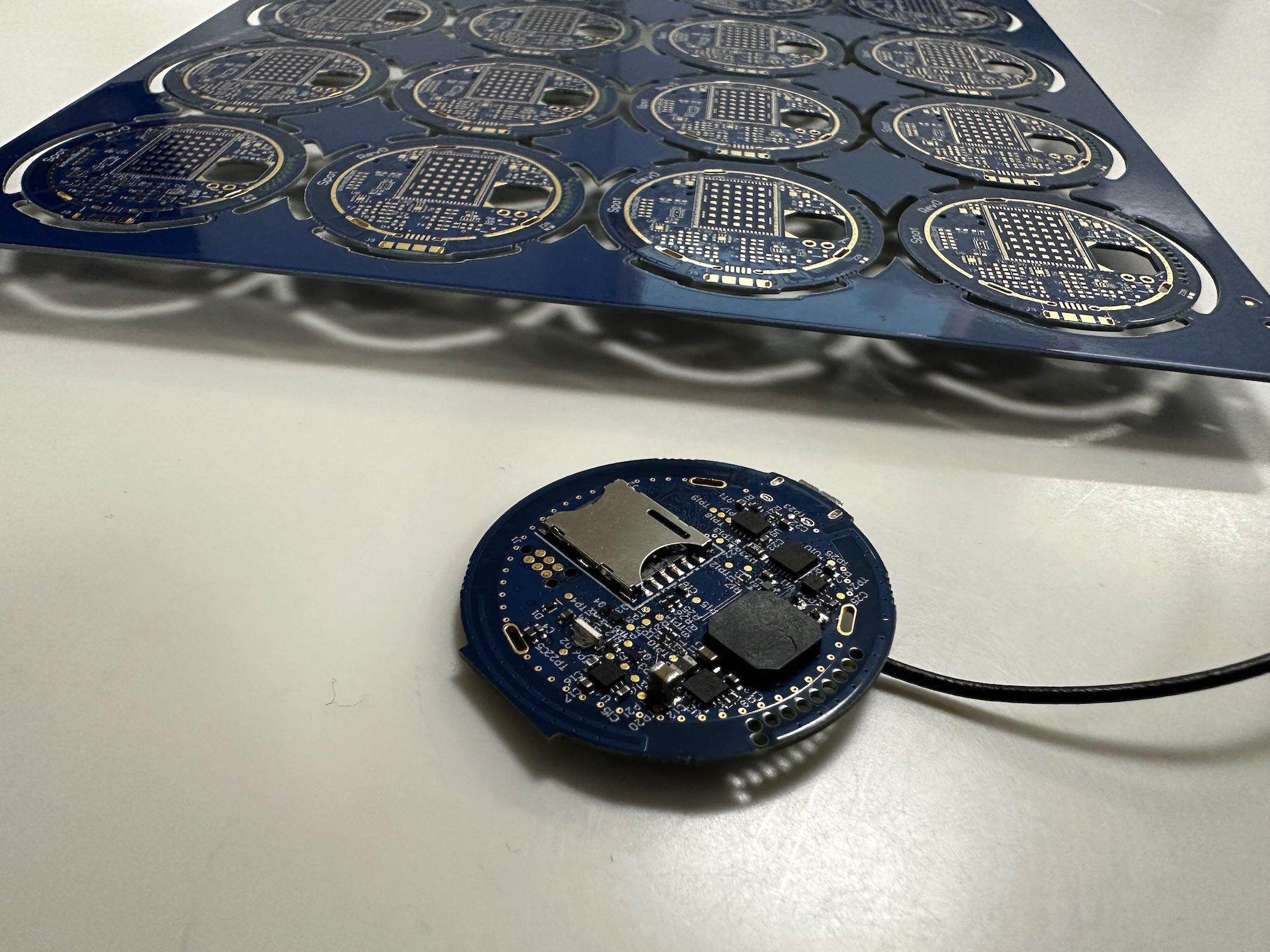
- Custom PCB integrating GPS, LTE, microcontroller, and power management
- Integrated antenna design optimized for small form factor
- Rechargeable battery system for wearable and charging case
Firmware & System Integration
- GPS tracking and LTE communication implementation
- Power management and device state control
- Interface definition for mobile app and cloud connectivity
- Full hardware/firmware integration
Charging Case Development
- Companion charging/storage device with aligned industrial design language
- Designed for portability and intuitive daily use
- Electrical/mechanical interfaces optimized for the wearable device
- Supports continuous readiness for “on-the-go” scenarios
RF & Antenna Optimization
Given the compact form factor, RF performance was a critical focus:
- Antenna prototyping and iterative tuning
- Evaluation of multiple configurations within enclosure constraints
5. Prototyping & Validation
Functional prototypes were fabricated and tested to validate:
- GPS accuracy and LTE communication reliability
- Battery performance and power consumption
- RF performance within integrated enclosure
- Mechanical durability and attachment usability
Testing included both bench validation and real-world field trials.
6. Design for Manufacturing
Throughout development, the team incorporated manufacturability considerations:
- Component selection aligned with production scalability
- Enclosure geometry designed for injection molding
- Assembly strategies for compact electronics integration
- Early evaluation of high-volume production pathways
RESULTS
The SPOT platform successfully evolved into a fully integrated system prototype, featuring:
- Real-time outdoor location tracking
- Reliable wireless communication via LTE
- Child-friendly industrial design and intuitive form factor
- Integrated charging and storage solution
- Custom electronics and embedded firmware platform
- Validated system architecture for future production
The project established a strong foundation for next-generation connected wearable devices, demonstrating the feasibility of a scalable, consumer-ready child monitoring solution.
Related Projects
Cell Therapy Manufacturing Platform – Expansion
Package Delivery System
Premium Vaporizer
Surgical Restraint System
Connected Pill Management