
Product Development
Your product vision, designed and engineered for market success.
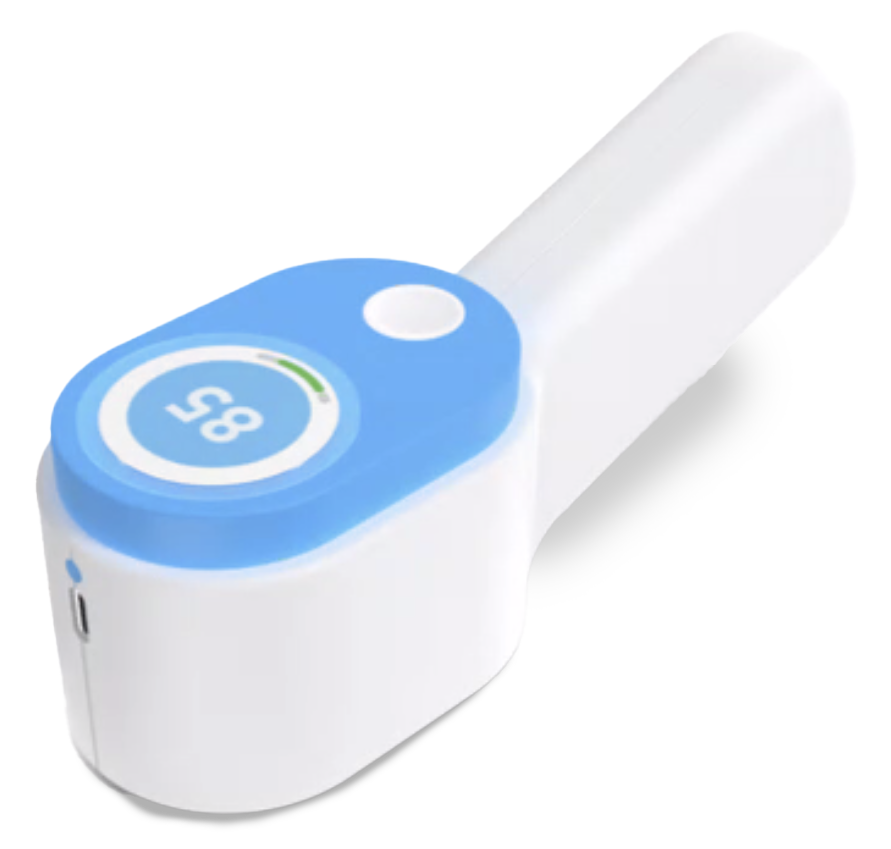
“Design is not just what it looks like and feels like. Design is how it works.” – Steve Jobs
At Diatomic Product Development, our Seattle-based team works with our client partners to turn a product idea into a product design that is commercially viable. We work closely with you throughout the entire product development process to ensure that we deliver designs that meet your product and business goals.
We bring together design vision, engineering precision, and project leadership to create products that connect innovation with manufacturability. Our multidisciplinary team of industrial design, mechanical, electrical, and firmware engineers transform ideas into market-ready solutions that are functional, beautiful, and production-ready.
Led by experienced program managers, every project follows a structured yet agile process that keeps development on schedule and aligned with performance, cost, and user goals.
Whether it’s a connected device, wearable, robotic instrument, or intelligent consumer system, we help clients deliver products that stand out in the marketplace. Innovative products designed for users, engineered for production, and managed for success.
Our Process
New product development can be challenging, particularly when novel technology is being implemented. Years of experience with developing new products has given us a robust process framework that serves as a roadmap to maximize development success.
This framework represents a unified process from idea to implementation. Our product development process connects creativity with precision – aligning design intent, engineering execution, and manufacturing realities. We leverage rapid prototyping, simulation, and testing to validate design approaches quickly. Each phase builds on the last, ensuring that innovation moves forward with clarity, control, and collaboration.
Here is a high-level summary of our phased approach. This framework is easily scaled to the needs of a specific new product initiative and your business goals/constraints.
IDEA &
OPPORTUNITY
Concept
Development
DESIGN &
ITERATE
PROTOTYPE
VERIFY &
MANUFACTURE
PHASE 1: DISCOVER
Product Insight & Opportunity
PHASE 1: DISCOVER
Product Insight & OpportunityWe start each project by working closely with you to understand the market and opportunity, key user needs, your business plans and drivers that define the product opportunity. The goal is a unified understanding of who the product is for, what problem it solves, and what success looks like.
Outcome: Clear requirements, target specifications, and a shared understanding of success.
Key activities:
- Market and user research to define unmet needs
- Competitive analysis and benchmarking
- Voice-of-customer (VOC) studies and workflow mapping
- Product visioning and value proposition definition
- Regulatory, environmental, and cost constraints identification
- Translation of insights into actionable engineering requirements
PHASE 2: DEMONSTRATE
Technology Feasibility & Concept Development
PHASE 2: DEMONSTRATE
Technology Feasibility & Concept DevelopmentWith the opportunity and requirements defined, we explore and validate the technical possibilities that will make the product real. Our engineering teams evaluate technologies and design architectures to ensure the concept is achievable. This phase reduces uncertainty by confirming that the technology can deliver the intended performance before investing in full design.
Outcome: Demonstration of key technologies and approaches what will be used in the product. Mitigation of product and project risk.
Key activities:
- Feasibility studies and proof-of-concept prototyping
- Technology evaluation (sensors, mechanisms, communications)
- Risk identification and mitigation planning
- Simulation and analysis (thermal, structural, signal, firmware performance)
- Concept industrial design and ergonomic exploration (form models)
- Preliminary cost modeling and manufacturability assessment
PHASE 3: DEFINE
System Architecture & Design Planning
PHASE 3: DEFINE
System Architecture & Design PlanningWe translate insights into actionable system architecture and product strategy. Once the technology direction is validated, we define how every subsystem fits together; mechanically, electrically, and logically. System architecture is where creativity meets structure: key interfaces, dependencies, and constraints are mapped and aligned across disciplines.
Outcome: A robust technical framework that is the blueprint for detailed design and prototype development. And a validated architecture and development plan aligned with technical and business objectives.
Key activities:
- System-level block diagrams and hardware–firmware partitioning
- Mechanical envelope modeling, packaging and integration studies
- Subsystem prototyping and testing
- Integration of industrial design and user interface goals
- Electrical schematic definition and component selection
- Firmware architecture planning and communication mapping
- Thermal, structural, power, and safety analysis
PHASE 4: DESIGN
Detailed Design & Development
PHASE 4: DESIGN
Detailed Design & DevelopmentThis is where the product takes full form. Ideas become tangible through concept exploration and detailed design. Each discipline develops its subsystem in detail, while continuous integration ensures everything fits, functions, and performs together as intended. This phase confirms that the design meets its requirements and is ready for the real world.
Outcome: A refined, feasible design ready for prototype evaluation and verification.
Detailed enclosure and mechanism design, electronics packaging, structural and thermal optimization, materials selection, tolerance analysis, and DFM/DFA preparation.
Schematic capture, PCB layout, power and signal integrity optimization, and integration of sensors, displays, and communication modules.
Low-level driver development, control and signal analysis algorithms, communication stacks, and application-layer firmware aligned with hardware performance.
Refinement of product form, ergonomics, and CMF (color, material, finish) to align aesthetics with function and brand.
Maintaining alignment between mechanical, electrical, and software subsystems; defining verification methods and validation criteria.
Key collaborative activities:
- Hardware and software detail design
- Regular cross-discipline design reviews
- Hardware and software integration and testing
- Prototype builds and bench testing
- Risk tracking and design iteration cycles
PHASE 5: DEVELOP
Engineering Prototype & Verification
PHASE 5: DEVELOP
Engineering Prototype & VerificationOur cross-functional engineering team refines every design detail for performance, safety, and compliance. Prototypes are tested, verified, and optimized under controlled conditions to ensure that the design meets all requirements.
Outcome: Fully verified, production-ready product documentation and test data.
Key collaborative activities:
- Prototype builds using tooled parts
- Verification and validation testing
- Certification testing (UL, FCC)
PHASE 6: DELIVER
Manufacturing Transfer & Launch Support
PHASE 6: DELIVER
Manufacturing Transfer & Launch SupportThe final step transforms engineering output into scalable production. We collaborate closely with contract manufacturers and suppliers to ensure a smooth transition from prototype to production.
Outcome: A manufacturable validated product that is ready for manufacturing, certification, and commercial success.
From Concept to Commercialization
Our integrated process ensures that design, engineering, and execution stay connected from the first sketch to the final build. The result: products that are beautifully designed, technically sound, and ready for market, including medical devices, scientific instruments, and connected IoT systems.
Why Diatomic?
At Diatomic Product Development our Seattle-based team works with our client partners to turn a product idea into a product design that is commercially viable.
Why Diatomic?
At Diatomic Product Development our Seattle-based team works with our client partners to turn a product idea into a product design that is commercially viable.