
Medical Device Development Services
Healthcare ideas and technologies transformed into market-ready medical products.
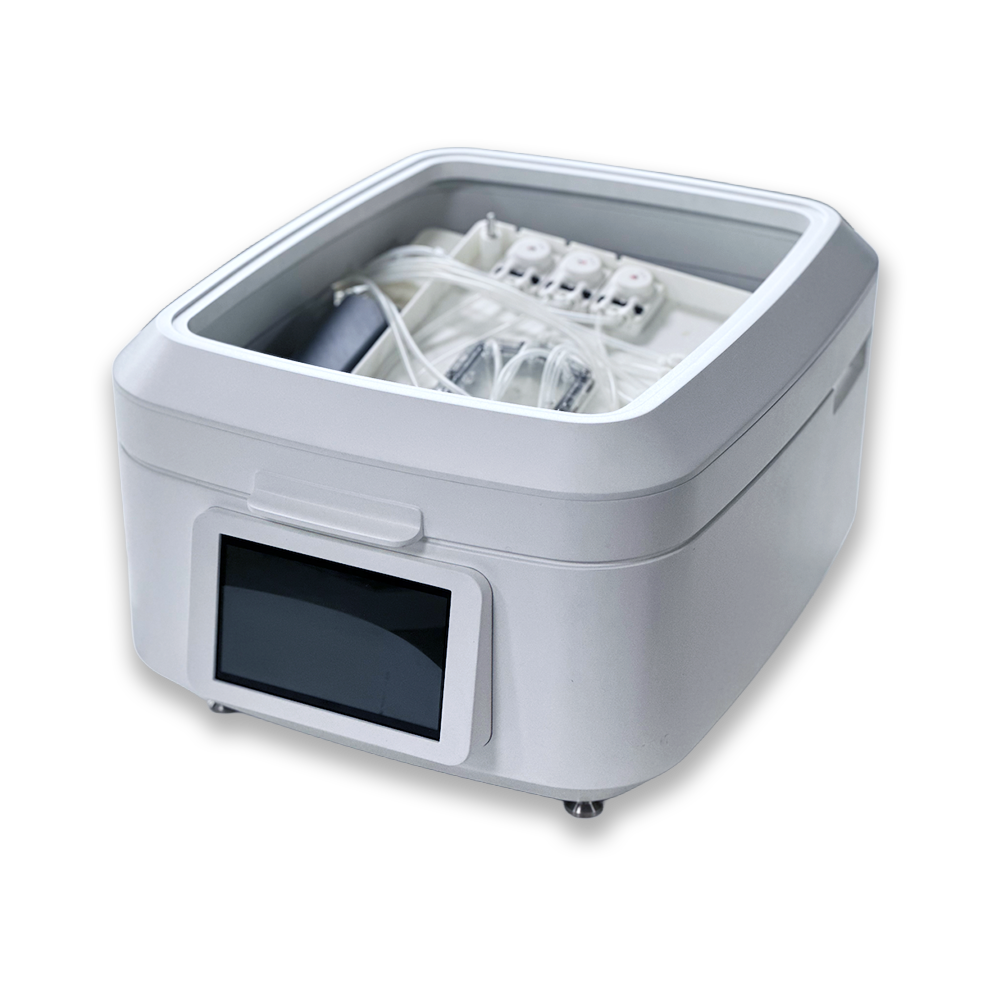
At Diatomic Product Development, our Seattle-based team works with our client partners to transform innovative healthcare ideas into safe, effective, and commercially viable medical products. We collaborate closely throughout every phase of development to ensure that each design aligns with your clinical, regulatory, and business objectives.
We bring together human-centered design, rigorous engineering, and disciplined project management to create devices that connect innovation with compliance and manufacturability.
Our multidisciplinary team of industrial design, electrical, mechanical, and firmware engineers can help you develop integrated medical devices within an ISO 13485 aligned process. We guide projects from concept and risk analysis through detailed design, prototyping, verification, and manufacturing transfer.
Every program is led by experienced project managers who ensure progress is structured, traceable, and aligned with clinical, regulatory, and business goals.
Whether developing a connected diagnostic device, wearable sensor, or laboratory instrument, we help our clients deliver products that improve health outcomes and stand up to real-world use. Product solutions that are designed for clinicians and patients, engineered for reliability, and managed for success.
Medical Device Development Process
Medical device development can be challenging, particularly when novel technology is being implemented. It requires more than engineering excellence. It demands structure, traceability, disciplined coordination and a thorough understanding of the regulatory process.
Years of experience with developing medical devices and products has given us a robust process that serves as a roadmap to maximize development success. Our process is phase-based, collaborative, and documented. This approach provides transparency, accountability, and confidence from concept through commercialization.
Here is a high-level phased summary of our approach. This framework is easily scaled to the needs of a specific new product initiative.
Idea &
Opportunity
Concept
Development
Design &
Iterate
Verify &
Manufacture
PHASE 1:
Market & User Needs Definition
PHASE 1:
Market & User Needs DefinitionEvery successful medical device begins with clarity of purpose. Our project managers lead early alignment sessions to define business objectives, clinical needs, and regulatory pathways. Engineers and designers translate these into measurable design inputs. The goal is a unified product vision, clear design inputs, and a program plan that aligns business, technical, and regulatory goals.
Program Management Activities:
- Define scope, milestones, and deliverables
- Establish project charter, schedule, and budget
- Identify stakeholders and communication structure
- Initiate risk and dependency tracking
Engineering Activities:
- Clinical and user workflow research
- Competitive and regulatory benchmarking
- User and intended-use definition
- Preliminary risk analysis (ISO 14971)
PHASE 2:
Concept & Technology Feasibility
PHASE 2:
Concept & Technology FeasibilityDuring this phase, our engineering team validates the technical approach through early prototypes and modeling, while program managers control scope, schedule, and resources to keep progress visible and risks managed. The result is a validated technology platform, and an updated project plan based on real-world feasibility data.
Program Management Activities:
- Track feasibility milestones and budget usage
- Maintain risk register and mitigation plans
- Facilitate design reviews and decision logs
- Communicate progress to stakeholders
Engineering Activities:
- Proof-of-concept builds and technology validation
- Component selection and subsystem evaluation
- Early usability and ergonomic studies
PHASE 3
System Architecture & Planning
PHASE 3
System Architecture & PlanningThis phase establishes the foundation for all detailed design work. Program managers formalize the Design and Development Plan (DDP) and ensure design control procedures, review schedules, and documentation standards are followed. The result is an approved architecture, aligned timelines, and a controlled plan ready for detailed design under traceable documentation.
Program Management Activities:
- Phase-gate planning and milestone definition
- Ensure alignment with quality and regulatory systems
- Interface and dependency tracking across teams
- Manage documentation, change control, and versioning
Engineering Activities:
- System-level hardware and software architectures
- Preliminary design verification strategy
- Mechanical envelope, PCB and electronics packaging
- Design review #1 (Architecture and Feasibility)
PHASE 4:
Detailed Design & Development
PHASE 4:
Detailed Design & DevelopmentThis is the most active phases, where each discipline executes detailed design under coordinated project oversight within an ISO 13485-aligned process. Program managers orchestrate the effort ensuring cross-discipline communication, schedule adherence, and effective risk management. The result is manufacturable design outputs, including drawings, firmware builds, BOMs, and documentation that are ready for prototype fabrication.
Program Management Activities:
- Weekly cross-functional progress reviews
- Critical path tracking and resource allocation
- Design change management and configuration control
- Risk and mitigation updates with engineering leads
Engineering Activities:
- Mechanical design (CAD, tolerances, DFM/DFA)
- Electrical design (schematic, PCB, EMC compliance)
- Firmware development (drivers, communication, control)
- Hardware and software integration
- Prototype builds and functional testing
- Usability refinement and human factors analysis
- Design reviews and Detailed Design Freeze
PHASE 5:
Verification & Validation (V&V)
PHASE 5:
Verification & Validation (V&V)Program management ensures verification and validation activities are executed systematically, with documented traceability between design inputs, outputs, and test results. The result is a fully verified and validated device, with a complete Design History File (DHF) and supporting test documentation.
Program Management Activities:
- Traceability matrix linking requirements to test results
- Coordinate V&V testing schedule and lab resources
- Monitor issue tracking, corrective actions, and closures
- Prepare milestone reviews and executive summaries
Engineering Activities:
- Verification test execution and reporting
- Validation testing with representative users/environments
- Environmental / reliability testing (thermal, vibration, EMC)
- Risk mitigation verification (ISO 14971 compliance)
- Design review #3 (Verification & Validation Readiness)
PHASE 6:
Manufacturing Transfer
PHASE 6:
Manufacturing TransferAs the design transitions to production, program management ensures that all manufacturing, quality, and regulatory deliverables are ready and verified. The result is a compliant, production-ready medical device with validated manufacturing processes and complete traceability from concept to release.
From Concept to Commercialization
Our integrated process keeps design, engineering, and regulatory execution aligned from the first concept sketch to the final validated build. The result: medical devices that are safe, effective, manufacturable, and compliant. Products solutions that are beautifully designed, technically sound, and ready for market and submission.
We balance human-centered design and technical rigor to create devices that perform reliably, meet FDA 21 CFR 820and IEC 62304 requirements, and deliver exceptional user experiences.
Why Diatomic?
We work with our client partners to transform innovative healthcare ideas into safe, effective, and commercially viable medical products.
Why Diatomic?
We work with our client partners to transform innovative healthcare ideas into safe, effective, and commercially viable medical products.